
What Are the 7 Principles of Photography? A Practical Guide for Beginners
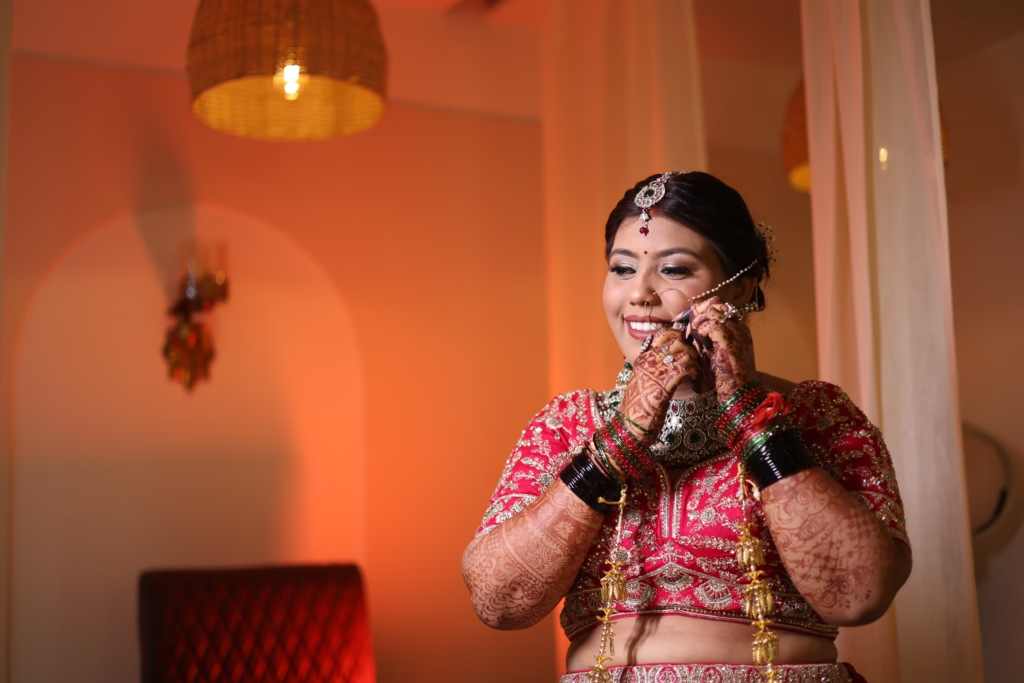
Have you ever taken a photograph of a beautiful moment, only to find that the picture does not look as good as it did when you saw it with your own eyes?
Perhaps the background looks distracting, the subject appears too small, or the lighting has taken away the feeling of the moment. This happens to beginners and experienced photographers alike. The difference often lies in how the scene is composed and how the photographer directs the viewer’s attention.
A camera records light, but a good photograph does much more. It tells the viewer where to look, what matters in the frame and how the different elements relate to one another.
That is where the seven principles of photography become useful.
The seven principles discussed in this article are balance, rhythm, pattern, emphasis, contrast, unity and movement. They are principles of visual design that photographers use to create stronger compositions. Different photography courses may use slightly different frameworks, but these seven provide a practical starting point for understanding why some photographs feel more compelling than others.
At Studio Rollii, we believe that understanding photography begins with learning to observe a scene, not simply learning to operate a camera. Let’s explore each principle with examples you can practise yourself.
1. Balance: Give Every Element Its Proper Place
Balance describes how visual weight is distributed within a photograph. Some elements naturally attract more attention than others. A brightly coloured object, a person’s face or a strongly lit area can draw the eye even when it occupies relatively little space.
Imagine photographing a bride standing on a decorated wedding stage. If she is positioned on the left side of the frame and a large, brightly illuminated decoration fills the right side, the decoration might compete with her for attention.
Moving your position, changing the framing or waiting for a better moment can help create a more balanced composition.
There are two common approaches to balance.
Symmetrical balance places similar visual elements on either side of the frame. It works particularly well with architectural backgrounds, decorated entrances, staircases and carefully arranged portraits.
Asymmetrical balance uses different elements to create visual stability. A couple positioned on one side of the frame may be balanced by an interesting architectural feature or an area of light on the other.
Neither approach is automatically better. The right choice depends on the subject and the feeling you want the photograph to convey.
How to practise balance
Before taking a photograph, look at all four edges of the frame. Check whether a bright light, a person standing in the background or an unwanted object is pulling attention away from the subject.
During wedding photography, this simple check is particularly useful when photographing family groups or couples on a decorated stage. The people may be arranged correctly, but a distracting background element can still weaken the final image.
Try photographing the same subject twice: first in the centre of the frame, then off-centre. Compare how each composition feels.
2. Rhythm: Lead the Eye Through the Photograph
Rhythm occurs when repeated visual elements create a sense of flow. The viewer’s eye moves from one element to the next, following the arrangement within the frame.
You can find rhythm in rows of chairs, decorative lights, architectural arches, repeating windows or a group of dancers moving together.
Consider a wedding venue with a line of lights leading towards the stage. Photographing the lights from an angle can create a visual path that draws attention towards the couple. The photograph becomes more than a record of the decoration; the repeated lights help direct the viewer’s attention.
Rhythm can also come from human activity. During a sangeet, dancers moving in a coordinated sequence can create a visual beat even within a single still photograph.
How to use rhythm effectively
Look for repeated lines, shapes, colours or objects. Then consider how the viewer’s eye might travel through them.
Changing your shooting position can make a considerable difference. A row of chairs photographed straight-on may look static, while the same row photographed diagonally can lead the eye deeper into the frame.
Rhythm should support the main subject rather than overwhelm it. If the repeated elements become more interesting than the subject you intended to photograph, adjust the composition.
3. Pattern: Notice the Details Others Overlook
Pattern is created when shapes, textures, colours or objects repeat. It can make a photograph feel organised, create visual interest and reveal details that might otherwise go unnoticed.
Photography offers countless opportunities to find patterns. Look at embroidered fabric, jewellery arrangements, decorative floor designs, rows of flowers, windows, railings or the repeated motifs on a wedding outfit.
A close-up of a bridal lehenga, for example, can reveal the embroidery and craftsmanship of the fabric. By filling the frame with the repeating design, the photographer makes texture and detail the main subject.
Patterns are not limited to decorative objects. Architecture, nature and everyday surroundings can provide equally interesting subjects.
Breaking a pattern can make the photograph stronger
Perfect repetition can be visually satisfying, but an interruption often creates the most interesting part of the image.
Imagine a row of identical chairs with one person sitting in the middle. The repeated chairs establish the pattern, while the person creates a focal point that immediately attracts attention.
This approach combines two principles: pattern and emphasis.
When photographing repeated designs, pay attention to the edges of the frame. Cropping an object unintentionally or allowing an unrelated element to intrude can make an otherwise clean pattern look untidy.
Practice exercise: Find a repeating design in your surroundings. Photograph it from a distance, then move closer and fill the frame with the details. Compare which version communicates the pattern more effectively.
4. Emphasis: Make the Main Subject Stand Out
Emphasis is the principle of making one element the primary point of attention. It answers a simple question: what should the viewer notice first?
A photograph can contain several interesting elements, but if all of them compete equally for attention, the image may feel confusing.
Photographers create emphasis through focus, light, colour, framing, perspective and contrast.
For example, a portrait of a bride may be photographed against a softly blurred background. The background remains visible, but the bride’s face and expression become more prominent.
A wide aperture can help produce this effect, although the result also depends on the lens, distance between the subject and background, and the framing.
Lighting is another effective tool. If the subject’s face is well illuminated while the surroundings are comparatively dark, the face may naturally become the first thing the viewer notices.
Emphasis in candid wedding photography
Wedding ceremonies often involve several things happening at once. Guests move around, family members react, decorative lights compete for attention and important rituals happen quickly.
A photographer must decide which moment deserves priority.
During a garland exchange, for instance, the couple’s expressions and interaction may be more meaningful than the surrounding decorations. Choosing the right angle and timing can make those expressions the centre of the photograph.
This is one of the practical skills that separates purposeful candid photography from simply taking a large number of pictures.
If you want to explore this approach further, visit Studio Rollii’s candid wedding photography page.
5. Contrast: Use Differences to Create Impact
Contrast occurs when elements differ in a noticeable way. The difference may involve brightness, colour, size, shape, texture or even emotion.
The most familiar form is tonal contrast, in which light areas stand out against darker ones. But colour and texture can create contrast just as effectively.
A colourful subject against a neutral background, delicate jewellery against richly embroidered fabric, or a person standing against a large architectural structure can all create strong visual relationships.
Four useful types of contrast
Tonal contrast: Differences between highlights, midtones and shadows help define the subject and give the image depth.
Colour contrast: Colours that differ strongly from their surroundings can attract attention. A bright red flower against green foliage is a simple example.
Texture contrast: Smooth, reflective jewellery photographed against textured fabric can create a detailed and visually interesting image.
Size contrast: A person photographed against a large building or architectural feature can communicate scale.
Contrast can also be emotional. A quiet expression surrounded by a busy celebration may communicate something more subtle than a photograph in which everyone is smiling.
Getting contrast right in wedding photography
Indoor wedding venues often combine decorative lighting, bright stage lights and darker surrounding areas. This creates opportunities for dramatic photographs, but it can also make exposure difficult.
If the highlights are too bright, details in white clothing may disappear. If shadows become too dark, black fabric may lose its texture.
The objective is not to make every photograph dramatic. It is to use differences deliberately while preserving the details that matter.
When practising, photograph the same subject against a similar-coloured background and then against a contrasting one. Notice how the subject’s visibility changes.
6. Unity: Make the Photograph Feel Complete
Unity refers to the way different elements work together to create a coherent image. The subject, lighting, background, colours and composition should feel as though they belong together.
A photograph may contain beautiful individual elements but still feel disorganised if those elements compete with one another.
Consider a couple’s portrait. If the background is cluttered, the lighting is inconsistent and several unrelated objects draw attention away from the couple, the photograph may lack unity even if the couple looks good.
Simplifying the frame can help. Choosing a more suitable background, adjusting your position or waiting for people to move out of the way may be more effective than trying to fix every distraction during editing.
Unity matters across a wedding album
A wedding is not documented through one photograph alone. A complete collection may include venue details, bridal preparations, portraits, family photographs, ceremonies and candid interactions.
These photographs should not all look identical. A close-up of jewellery serves a different purpose from a wide photograph of the venue or an emotional moment between family members.
Unity comes from making the images work together as parts of the same story.
Consistent editing, thoughtful colour choices and a balance between wide shots and close-ups can help create that connection. The photographs retain their individuality while contributing to a coherent collection.
For couples choosing a wedding photographer, this is a good reason to review a complete wedding gallery rather than judging the photographer solely by a few spectacular portraits. Studio Rollii’s photography gallery can help readers explore different approaches to photographic storytelling.
7. Movement: Show Action or Guide the Viewer’s Eye
Movement has two meanings in photography.
The first is visual movement: the way the composition guides the viewer’s eye through the image. The second is physical movement: action recorded by the camera, either frozen sharply or represented through motion blur.
Understanding the difference helps you decide how to photograph a scene.
Visual movement
Leading lines, diagonal arrangements, curved shapes and the direction in which a person is looking can guide the eye across the frame.
Imagine photographing a bride walking towards the ceremony. Including the aisle and the direction of her movement can help the viewer understand where she is going and what is happening around her.
The photograph communicates the event rather than simply showing a person standing in a decorated venue.
Physical movement
Shutter speed determines how movement is recorded.
A faster shutter speed can freeze a dancer’s gesture, a guest throwing flower petals or a couple exchanging garlands. A slower shutter speed can introduce motion blur, which may be useful when you want to convey movement and energy.
For example, during a dance performance, a fast shutter speed can preserve the dancer’s expression and hand position. A slower shutter speed may create a more dynamic image by allowing the movement to appear as a blur.
Neither technique is universally better. The decision depends on whether you want to preserve a precise moment or communicate the feeling of motion.
Low-light venues make this more challenging because faster shutter speeds reduce the amount of light recorded. The photographer may need to open the aperture, increase ISO or use appropriate additional lighting.
Practice exercise: Photograph a person walking across your frame. Take one image that freezes the movement and another that deliberately uses motion blur. Compare how each photograph communicates the action.
How the Seven Principles Work Together
The principles are most useful when you understand how they interact. A single photograph can demonstrate several of them at once.
Imagine a couple standing beneath a decorated arch at a wedding venue.
Balance helps organise the couple and the surrounding elements.
Rhythm can be created by repeated decorative lights leading towards them.
Pattern appears in the repeating shapes of the arch or the details of the décor.
Emphasis ensures that the couple remains the main subject.
Contrast separates the couple from the background through light, colour or texture.
Unity connects the couple, surroundings and lighting into one coherent composition.
Movement guides the viewer’s eye through the frame or captures the couple in action.
You do not need all seven principles in every photograph. A close-up portrait may rely mainly on emphasis and contrast, while an architectural image may depend more heavily on balance, rhythm and pattern.
The purpose is not to follow a rigid checklist. It is to make conscious decisions about what belongs in the frame and how the photograph should communicate its subject.
How to Practise the Principles Without Expensive Equipment
You can begin learning these principles with a smartphone or an entry-level camera. Equipment affects the technical possibilities available to you, but observation and composition are skills you can develop with almost any camera.
Start with a simple exercise: choose one subject and photograph it in three different ways. Keep the subject the same, but change its position within the frame, the background or the direction from which you photograph it.
Compare the results. Which version has the clearest focal point? Which feels balanced? Does one background create stronger contrast than another?
You can also practise by observing light. Photograph a subject near a window, then try again when the light changes. Notice how shadows, highlights and the direction of light affect the photograph.
If your camera allows manual control, experiment with shutter speed to understand movement. Use a faster shutter speed to freeze action and a slower one to create motion blur.
Finally, review your photographs after each session. Ask yourself:
What catches my attention first?
Is anything distracting from the subject?
Does the lighting support the mood?
Is the composition balanced, or is the imbalance intentional?
Does the image communicate what I intended?
This kind of review is often more useful than taking hundreds of photographs without examining why some work better than others.
Why These Principles Matter in Wedding Photography
Wedding photography requires photographers to make visual decisions while events are unfolding. Lighting can change quickly, schedules may shift and important expressions or rituals may last only a moment.
A couple’s portrait allows time to adjust the composition, select a background and work with the available light. A spontaneous family reaction during a ceremony may offer no second chance.
The photographer needs to recognise the moment, find a useful angle, manage exposure and decide which elements should receive attention.
Indoor venues introduce challenges such as mixed lighting, reflective decorations, crowded stages and bright backgrounds. Outdoor ceremonies bring changing sunlight, shadows and weather conditions. Family group photographs require particular care with positioning, expressions and the visibility of everyone in the frame.
The seven principles offer a practical framework for handling these situations. They help the photographer simplify a busy scene, guide attention towards the important moment and create images that remain meaningful long after the celebration.
Technical knowledge is equally important. Aperture, shutter speed, ISO, focus and white balance determine how effectively the photographer can execute the intended composition.
For couples planning a wedding in Kanpur, reviewing a photographer’s approach to composition and storytelling can be just as useful as looking at equipment or comparing package prices. You can learn more about wedding photography services from Studio Rollii and explore options for documenting your celebration.
Frequently Asked Questions
What are the seven principles of photography?
The seven principles covered here are balance, rhythm, pattern, emphasis, contrast, unity and movement. They are principles of visual design used to understand how a photograph’s elements interact and how the viewer’s attention is guided.
Some photography courses use alternative frameworks, so the exact list can vary.
Are the principles of photography the same as the rules of composition?
No. Principles describe broader visual relationships, while compositional guidelines provide specific ways to arrange a photograph.
For example, the rule of thirds is a compositional guideline that can help with balance and emphasis. Leading lines are another technique that can create visual movement.
Which principle should beginners learn first?
Emphasis is a useful starting point. Before taking a photograph, identify what you want the viewer to notice first. Once you have established the subject, you can make better decisions about framing, balance, contrast and the background.
Do I need an expensive camera to use these principles?
No. A smartphone is sufficient for practising most compositional principles. More advanced cameras provide greater control over low-light performance, depth of field and other technical factors, but they do not automatically create stronger photographs.
How do the principles improve wedding photography?
They help photographers organise busy scenes, direct attention towards important expressions, work with difficult lighting and create a coherent wedding album. They are particularly useful when the photographer must make decisions quickly and cannot repeat a moment.
Can all seven principles be used in one photograph?
Yes, but there is no need to force them into every frame. A photograph may work particularly well because of its simplicity, relying on one or two principles rather than all seven. The important thing is that the composition serves the subject.
A Final Thought
A compelling photograph often begins with a small decision: moving a step to the side, waiting for the light to improve, removing a distracting background element or recognising an expression before it disappears.
The seven principles help you understand why these decisions matter. Practise them individually, compare your results and gradually learn to recognise the strongest composition before you press the shutter.
For photographers developing their skills in Kanpur and elsewhere, this is a practical foundation for better portraits, more thoughtful compositions and stronger visual storytelling.
If you are planning a wedding or another important occasion, contact Studio Rollii to discuss your photography requirements.
Studio Rollii — thoughtful photography, meaningful moments and stories worth remembering.
One Comment
[…] What Are the 7 Principles of Photography? […]