
You can shortlist ten wedding photographers in an evening. The harder part is deciding which one you can actually trust with a day that cannot be repeated.
A wedding photographer is present during some of the most important moments of the celebration: the bride getting ready, the groom’s arrival, family photographs, rituals, laughter with friends, emotional reactions and the quieter moments that may not even be noticed until the photographs are delivered.
That is why choosing a wedding photographer should not be based only on the most attractive photograph on Instagram or the lowest package price.
The right choice starts with understanding what you want your wedding photographs to feel like, then checking whether the photographer’s work, team, process and package can realistically deliver that.
Here is a practical way to evaluate a wedding photographer before you book.
1. Decide what you want your wedding photographs to feel like
Before comparing photographers, spend some time looking at wedding photographs and identify what attracts you.
Do you prefer photographs that feel natural and documentary? Do you like carefully composed portraits with dramatic lighting? Are you more interested in candid emotions, traditional family photographs, cinematic images or a combination of different approaches?
You do not need to know the technical names for these styles.
Simply save photographs that you genuinely like and look for patterns.
If you repeatedly save emotional family moments, natural expressions and photographs where people seem unaware of the camera, you may prefer a stronger candid or documentary approach. If you are drawn to controlled lighting, elegant poses and carefully designed compositions, portrait-oriented wedding photography may matter more to you.
Many couples ultimately want both.
A good wedding photography team should be able to balance planned portraits and family photographs with spontaneous moments rather than treating the entire wedding as one long photoshoot.
If candid photography is particularly important to you, take a look at Studio Rollii’s candid wedding photography service for an example of how candid coverage can focus on emotions, interactions and real wedding moments.
2. Look at a complete wedding, not just the best 20 photographs
This is one of the most useful checks you can make.
A photographer can have twenty exceptional photographs on Instagram. That does not necessarily tell you how they handle an entire wedding.
Ask to see a complete wedding gallery.
Look for photographs from different parts of the day:
Getting ready
Bride and groom portraits
Family photographs
Details and decorations
Haldi, Mehndi or other pre-wedding functions
Baraat and entry
Varmala
Wedding rituals
Couple portraits
Friends and relatives
Reception
Emotional and unscripted moments
Pay attention to consistency.
Are the photographs good only when the light is perfect, or does the photographer also produce strong images in difficult indoor lighting, crowded spaces and fast-moving ceremonies?
A wedding photographer has to solve these problems while the event is happening. There is rarely an opportunity to stop the ceremony and recreate a missed moment.
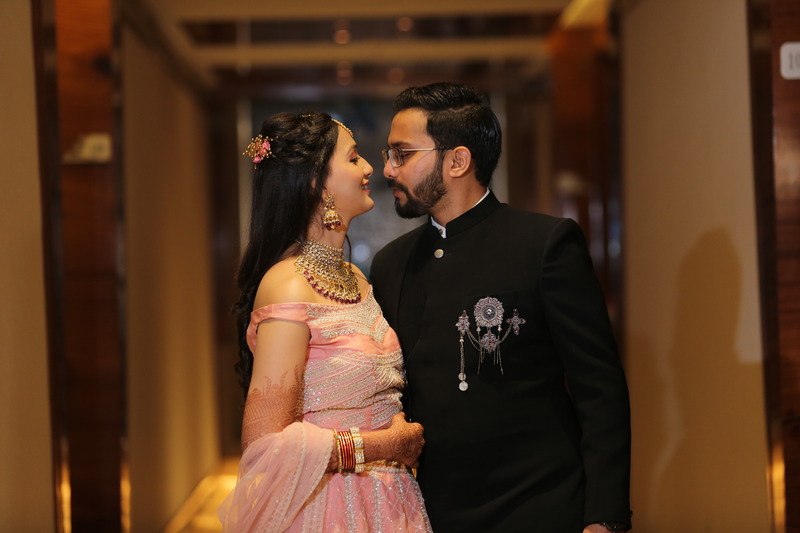
3. Understand the difference between candid and posed photography
“Candid” has become one of the most commonly used words in wedding photography, but it can mean different things to different photographers.
Candid photography is not simply photographing someone without them looking at the camera.
Good candid photography involves anticipation, timing, positioning and observation.
A photographer may notice a father’s reaction during the varmala, a bride laughing with her friends, grandparents watching a ceremony or a quiet interaction between the couple. These moments can last only a second.
At the same time, traditional or directed photography has an important role.
Family photographs, group portraits and certain couple portraits often need some direction to make sure everyone is positioned properly and important combinations are not missed.
For most Indian weddings, the question should therefore not be “candid or traditional?”
A more useful question is:
“Can this photographer balance both without making the wedding feel like a photoshoot?”
to understand what is the difference between candid and tradition photoshoot check our blog on it
4. Check who will actually photograph your wedding
This is an easy detail to overlook.
Sometimes you communicate with one photographer during the enquiry process but another photographer or a larger team photographs the wedding.
That is not necessarily a problem. A larger team can be extremely useful for a multi-function Indian wedding.
But you should know what you are booking.
Ask:
Who will be the lead photographer?
How many photographers will attend?
Will there be separate photographers for the bride and groom?
Who will handle traditional photography?
Who will handle cinematography?
Will the same team cover all functions?
What happens if the assigned photographer is unavailable?
The answer should be clear before you pay the booking amount.
For a large wedding with multiple ceremonies happening in different locations, team coordination can be just as important as individual photography skills.
5. Match the photographer to your wedding schedule
A wedding is not always a single event at one venue.
There may be a morning Haldi at home, an afternoon ceremony at a banquet hall, a Baraat in the evening and a late-night reception. Sometimes the bride and groom are getting ready at different locations.
This changes how photography needs to be planned.
Discuss your complete schedule with the photographer.
If there are simultaneous events, ask how the team plans to cover them. If the bride and groom are getting ready at different locations, determine whether there will be photographers at both places.
Also consider travel time between venues.
A photography schedule that looks comfortable on paper can become very tight once traffic, delays, family photographs and ceremony timings are taken into account.
The photographer should understand the wedding timeline rather than simply selling you a fixed number of hours.
6. Ask how the photographer works with your family
Wedding photography involves more people than just the couple.
Parents, grandparents, siblings, cousins and friends all become part of the final collection.
Some of the photographs your family will value most may not be the photographs that initially attracted you to a photographer’s portfolio.
A beautiful couple portrait is important. So is the photograph of your parents watching the ceremony.
Before booking, tell your photographer about important family members and any photographs that you definitely want.
For example, you may want:
A photograph with grandparents
Immediate-family portraits
Separate photographs with siblings
Important relatives who have travelled from another city
Traditional family combinations
Photographs with close friends
Couple portraits away from the crowd
These can be planned without making the entire wedding feel overly structured.
7. Don’t compare wedding photography packages by price alone
Two wedding photography packages can have very different prices while appearing similar at first glance.
One may include two photographers for ten hours. Another may include three photographers, cinematography, an album, additional functions and longer coverage.
So don’t ask only:
“How much does wedding photography cost?”
Ask:
“What exactly am I receiving for that price?”
Compare the actual deliverables.
Check whether the package includes:
Number of photographers
Number of cinematographers
Hours of coverage
Candid photography
Traditional photography
Wedding films
Pre-wedding photography, if required
Albums
Number of edited photographs
Highlight film
Full-length ceremony or wedding film
Delivery timeline
Additional-hour charges
Travel charges
Drone coverage, where appropriate and legally permitted
Album design and revision process
A lower quotation is not automatically cheaper if important requirements have been excluded.
Likewise, the most expensive package is not automatically the most suitable one.
The objective is to compare coverage and deliverables, not just numbers.
8. Ask to see the photographer’s work in difficult lighting
This is particularly important for Indian weddings.
Wedding photographers may have to work in bright outdoor sunlight, dim banquet halls, coloured stage lighting, mixed artificial light, dark dance floors and fast-moving Baraat situations—all during the same event.
Look carefully at photographs taken in difficult conditions.
Are skin tones natural?
Do faces remain properly exposed?
Are highlights badly blown out?
Does the colour remain consistent from one photograph to another?
Do photographs look excessively edited?
Good equipment helps, but equipment alone does not solve lighting problems. The photographer’s ability to read the environment and make quick technical decisions matters considerably more.
9. Ask about backup equipment and data
This is a question that couples sometimes remember only after something goes wrong.
Ask what happens if a camera, lens, flash or memory card fails.
Professional wedding coverage should have a sensible equipment and data-backup process.
You can ask:
“What is your backup plan if equipment fails during the wedding?”
Also ask how photographs are stored after the wedding and whether the files are backed up during the editing and delivery process.
You do not need to understand every technical detail. You simply need confidence that one equipment failure will not put your wedding memories at unnecessary risk.
10. Understand what happens after the wedding
The photography does not end when the last guest leaves.
There is a substantial post-production process after a wedding: image selection, colour correction, editing, retouching where required, album selection, design, revisions and final delivery.
Ask about the expected delivery process before booking.
Questions worth asking include:
How long will the edited photographs take?
How are photographs delivered?
Will the photographs be provided in high resolution?
How is the album selection handled?
Can the couple request album changes?
What is included in the wedding film?
How long does cinematic film editing take?
Are additional edits available?
How long are the photographs stored by the studio?
A clear post-production process can prevent confusion months after the wedding.
11. Read reviews for the experience, not just the rating
A five-star rating tells you very little by itself.
Read what clients actually mention.
Look for comments about communication, punctuality, professionalism, behaviour with family members, flexibility during the wedding, quality of photographs and delivery.
A wedding photographer spends a lot of time around you and your family. The working relationship matters.
If someone is technically talented but difficult to communicate with, the experience can become unnecessarily stressful.
Reviews should not replace your own evaluation, but they can reveal patterns that are difficult to see from a portfolio.
12. Meet or speak with the photographer before booking
A short conversation can tell you things a website cannot.
Explain your wedding plans rather than simply asking for a quotation.
Tell the photographer:
Your wedding date
Venue or venues
Number of functions
Approximate guest count
Photography style you prefer
Important family requirements
Whether you need cinematography
Whether you want a pre-wedding shoot
Any special cultural or family traditions
What you particularly want to remember
Then listen to the questions the photographer asks you.
A professional should want to understand your wedding before recommending coverage.
The conversation should feel like planning a photography assignment, not simply purchasing a product.
13. Ask for a written agreement
Once you have decided to book, make sure the important terms are documented.
Your agreement should clearly mention the wedding date, coverage, deliverables, payment schedule, cancellation or postponement terms, additional charges and expected delivery.
If there are specific requirements that were discussed verbally, make sure they are included in writing.
This is especially useful for weddings because plans can change between the initial booking and the actual event.
Clear documentation protects both the couple and the photographer.
14. Don’t forget the album
Digital photographs are convenient, but a wedding album serves a different purpose.
It turns selected photographs into a physical family record.
If an album is part of your package, ask to see an actual sample rather than judging it from a digital mock-up alone.
Look at:
Paper quality
Print quality
Colour reproduction
Binding
Cover material
Photograph selection
Layout
Size
Number of spreads
The album design should give important photographs enough space instead of trying to fit every photograph into one book.
15. Think about the photographs you will value ten years from now
This is perhaps the most useful way to make the final decision.
Imagine looking through your wedding photographs years later.
You will probably want beautiful portraits. But you will also want photographs of people who were important to you, moments you had forgotten, family members who may no longer be around, small details of the celebration and expressions that happened naturally.
That changes the way you evaluate a photographer.
Instead of asking only:
“Does this photographer take beautiful photographs?”
ask:
“Can this photographer tell the complete story of our wedding?”
That distinction matters.
A simple wedding photographer checklist
Before making your booking, you should be comfortable answering these questions:
| Question | What to check |
|---|---|
| Do I like the photographer’s style? | Look at complete wedding galleries |
| Have I seen a full wedding? | Check consistency across different functions |
| Who will photograph my wedding? | Confirm the actual team |
| Is the coverage sufficient? | Compare your schedule with the hours booked |
| Are family photographs included? | Discuss important combinations |
| Is candid photography genuinely part of the approach? | Look for natural moments in complete galleries |
| What exactly is included? | Compare deliverables rather than price |
| What happens if equipment fails? | Ask about backup equipment and data |
| How long will delivery take? | Confirm the post-production timeline |
| Is there an agreement? | Get the important terms in writing |
| Have I spoken with the photographer? | Discuss your wedding before booking |
| Would I trust this team around my family? | Consider the overall experience |
Choosing a wedding photographer is really choosing a way of remembering your wedding
There is no single photography style that is right for every couple.
Some couples want dramatic portraits. Others prefer photographs that feel almost invisible and documentary. Many want a mixture of candid moments, traditional family photographs, elegant portraits and cinematic films.
The important thing is that the photographer understands what matters to you.
At Studio Rollii, our wedding photography approach combines candid moments, planned portraits, family photographs and the visual details that make each celebration different. We are based in Kanpur and work with couples and families across Kanpur and nearby locations.
You can explore our wedding photography services to understand the broader approach, or see our candid wedding photography work if natural, emotion-led photographs are particularly important to you.
If you are also planning a pre-wedding session, our pre-wedding photography service can help you understand how that part of the experience fits into the larger wedding story.
And when you are ready to discuss your date, venue, functions and photography requirements, you can contact Studio Rollii and have a conversation before deciding on your package.
The best wedding photographer for you is not necessarily the photographer with the biggest social media following or the longest package list. It is the photographer whose work you genuinely connect with, whose process you understand, and whose team you feel comfortable trusting with moments that cannot be repeated.
If you are specifically planning your wedding in Kanpur, you can also read our detailed guide on how to choose a wedding photographer in Kanpur, which covers local considerations such as venues, schedules, reviews and practical coordination.
One Comment
[…] How to Choose a Wedding Photographer: A Practical Guide for Couples […]