
Your wedding day moves quickly.
One moment you are getting ready, the next you are surrounded by family, and before you realise it, the ceremonies are over. Months or years later, what remains are the photographs that bring those moments back.
That is why good wedding photography is not simply about taking hundreds of pictures. It is about making sure the important people, emotions, details and moments of your wedding are not missed.
Whether you are planning a traditional wedding in Kanpur, a multi-day celebration, an intimate ceremony or a large wedding with several functions, having a photography checklist can help you and your photographer plan the coverage properly.
At Studio Rollii, we believe the best wedding photographs come from a combination of planning, observation and allowing genuine moments to happen naturally.
Here is a practical wedding photography checklist you can use while planning your wedding.

1. Before the Wedding: The Details That Are Easy to Forget
Some of the most meaningful photographs are taken before the actual ceremony begins.
These photographs establish the story of your wedding day and preserve small details that may otherwise disappear.
Ask your photographer to capture:
Wedding invitation and stationery
Wedding rings
Bridal jewellery
Lehenga, saree or wedding outfit
Groom’s sherwani or wedding attire
Bridal shoes
Groom’s accessories
Perfume and other personal details
Wedding décor before guests arrive
Flowers and stage decoration
Mehndi details
Important family heirlooms
Special gifts exchanged between families
These photographs may seem insignificant on the wedding day, but they often become some of the favourite images when you look through your wedding album years later.
2. Bridal Getting-Ready Photography
The bridal preparation is one of the most emotional parts of a wedding day.
Instead of photographing only the final look, give your photographer enough time to document the transformation.
Important moments include:
Bride getting her makeup done
Hairstyling
Jewellery being put on
Mother or sister helping with the outfit
Bridal shoes
Final mirror check
Bride with her bridesmaids
Parents seeing the bride ready
Emotional conversations before leaving for the ceremony
Close-up portraits of the bride
The same applies to the groom.
Photographs of the groom getting ready with his brothers, friends or family can add another important chapter to the wedding story.
3. Family Moments Before the Ceremony
Weddings are not only about the bride and groom.
They bring together parents, grandparents, siblings, cousins and friends who may not all be together again for a long time.
Your photographer should look for moments such as:
Parents with the bride
Parents with the groom
Bride with grandparents
Groom with grandparents
Brothers and sisters together
Cousins together
Childhood friends meeting again
Family members helping with preparations
Parents sharing an emotional moment
Informal conversations between family members
These are exactly the kind of photographs that become increasingly valuable with time.
4. Mehndi Photography
If you are having a mehndi ceremony, don’t limit the photography to close-up photographs of the mehndi design.
Capture the atmosphere as well.
Consider photographing:
Bride’s mehndi design
Mehndi artist at work
Bride’s expressions during the application
Friends and cousins enjoying the function
Family interactions
Dancing and celebrations
Décor
Bridal portraits
Candid conversations
Fun moments between the bride and her friends
Mehndi functions often provide some of the most relaxed and colourful photographs of an Indian wedding.
5. Haldi Photography
Haldi is another function where genuine emotions and spontaneous moments naturally happen.
Your photographer should be prepared for:
Bride’s first haldi application
Groom’s haldi ceremony
Parents applying haldi
Siblings and cousins
Friends applying haldi
Playful moments
Laughter
Emotional family moments
Haldi décor
Group photographs
Portraits of the bride and groom after the ceremony
Because Haldi can become energetic very quickly, experienced wedding photography coverage is particularly important.
6. The Baraat
For a traditional North Indian wedding, the baraat is an important part of the story.
Some moments worth capturing include:
Groom leaving for the wedding
Groom’s family getting ready
Baraat arriving
Groom on the horse or in the vehicle
Friends and relatives dancing
Dhol players
Parents and family members
Guests welcoming the baraat
Bride’s family waiting for the groom
Reactions when the baraat arrives
A good photographer should photograph both the large celebration and the smaller interactions happening within it.
7. Bride’s Entry
The bride’s entry is one of the moments that should never be rushed.
The photographer should be ready before the bride enters.
Important photographs include:
Bride waiting before the entry
Her first step into the venue
Parents or siblings accompanying her
Bride’s expression
Groom’s reaction
Guests reacting to the bride
Wide photographs showing the complete setting
Close-up emotional moments
The groom’s reaction is particularly important and is often one of the most memorable photographs of the ceremony.
8. Wedding Rituals and Ceremonies
Indian weddings can involve numerous rituals, and the exact ceremonies vary according to family and tradition.
Your photographer should know the schedule beforehand so important rituals are not missed.
Depending on the wedding, this may include:
Varmala
Jai Mala reactions
Ganesh Puja
Kanyadaan
Pheras
Sindoor
Mangalsutra
Family blessings
Religious rituals
Exchange of garlands
Emotional moments between parents and the couple
For traditional weddings, it is particularly useful to share the ceremony sequence with your photographer in advance.
9. Varmala Photography
The varmala deserves more than one photograph.
There are usually several moments happening within a few seconds:
Bride and groom approaching each other
Exchange of garlands
Family reactions
Friends teasing the couple
Laughter
Confetti or flower shower
Couple’s expressions
Wide venue photograph
A combination of candid photographs, portraits and wider compositions can tell the complete story.
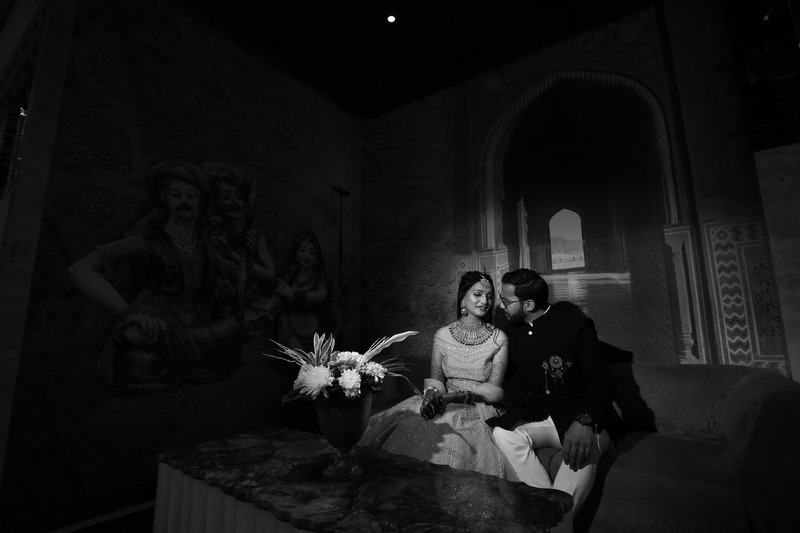
10. Couple Portraits
Your wedding day will be full of people, rituals and activities.
Make sure you also reserve some time for photographs of just the two of you.
A good couple session can include:
Traditional portraits
Natural candid portraits
Walking photographs
Close-up portraits
Full-length photographs
Photographs with the wedding décor
Emotional and quiet moments
Photographs showing the venue
You do not need to spend hours away from your guests. Even 20–30 minutes of properly planned couple photography can produce a meaningful collection of portraits.
11. Family Group Photographs
Candid photographs are important, but traditional family photographs should not be ignored.
Make a list of the combinations you definitely want.
For example:
Bride with parents
Groom with parents
Bride and groom with both families
Bride with siblings
Groom with siblings
Couple with grandparents
Couple with immediate family
Couple with close relatives
Couple with friends
A small family-photo list can save considerable time and prevent someone important from being missed.
12. Friends and Cousins
Some of the funniest wedding photographs come from friends and cousins.
Make time for:
Bride with her friends
Groom with his friends
Bridesmaids
Groomsmen
Cousins
Childhood friends
College friends
Work friends
Combined friend groups
These photographs often have a completely different energy from formal family portraits.
13. Wedding Décor and Venue
Before guests occupy the venue, photograph the space while everything is still perfect.
This includes:
Entrance
Stage
Mandap
Floral decoration
Table settings
Lighting
Seating arrangement
Wedding signage
Personalised décor
Dining area
Special installations
These images help preserve the atmosphere and design of the wedding, not just the people.
14. Small Emotional Moments
This is where an experienced wedding photographer makes a real difference.
Not every important photograph appears on the wedding schedule.
It could be:
A father quietly looking at his daughter.
A mother adjusting the bride’s jewellery.
A grandparent blessing the couple.
A brother becoming emotional.
Friends laughing together.
The bride and groom sharing a quick glance during a ceremony.
These moments cannot always be planned. They have to be noticed.
15. Vidaai Photography
Vidaai can be one of the most emotional parts of an Indian wedding.
Your photographer should capture the emotions respectfully rather than turning every moment into a posed photograph.
Important moments can include:
Bride saying goodbye to her parents
Parents blessing the bride
Bride with siblings
Emotional family interactions
Groom supporting the bride
Final moments at the venue
Bride leaving with the groom
These photographs often become some of the most personal photographs in the wedding album.
A Simple Wedding Photography Checklist
Before your wedding, discuss these categories with your photographer:
Bride
Getting ready
Bridal portraits
Jewellery and outfit
Family interactions
Bride’s entry
Rituals
Couple portraits
Vidaai
Groom
Getting ready
Groom portraits
Family interactions
Baraat
Bride’s entry reaction
Wedding rituals
Couple portraits
Family
Parents
Grandparents
Siblings
Cousins
Extended family
Family group photographs
Friends
Bridesmaids
Groomsmen
Childhood friends
College friends
Work friends
Informal group photographs
Wedding
Décor
Venue
Rituals
Varmala
Pheras
Emotional moments
Couple portraits
Vidaai
Should You Choose Candid or Traditional Wedding Photography?
This is not necessarily an either-or decision.
Traditional photography is particularly useful for documenting important rituals, family combinations and formal portraits.
Candid photography focuses more on expressions, emotions, interactions and spontaneous moments.
For most Indian weddings, a combination of both approaches provides a more complete visual record.
If you want to understand the difference in more detail, read our guide on Candid Photography vs Traditional Photography.
https://studiorollei.com/candid-photography-vs-traditional-photography/
How to Make This Checklist Work for a Wedding in Kanpur
Wedding photography becomes much easier when the photographer receives the schedule before the wedding day.
For weddings in Kanpur and nearby areas, share:
Venue details
Function timings
Ceremony sequence
Bride and groom preparation locations
Approximate guest count
Important family members
Special rituals
Couple portrait time
Any surprise performances
Important photographs you specifically want
If your wedding includes multiple venues or functions, provide the complete schedule rather than only the main wedding timing.
This allows the photography team to plan equipment, lighting, travel time and photographer allocation properly.
For example, a wedding involving Mehndi at one location, Haldi at another and the main wedding at a separate venue requires considerably more planning than a single-day ceremony at one venue.
Don’t Try to Pose for Every Photograph
One of the biggest mistakes couples make is worrying about how they should look in every photograph.
You don’t need to.
Some of the best wedding photographs happen when you stop thinking about the camera.
Talk to your family.
Laugh with your friends.
Look at each other.
Enjoy the ceremony.
Let your photographer observe what is happening around you.
The photographer’s job is not only to create beautiful portraits but also to preserve the story of the day as it actually happened.
What Makes a Good Wedding Photography Checklist?
A useful checklist should do three things:
First, it should protect the important moments.
You don’t want to realise after the wedding that you forgot photographs with your grandparents or your closest friends.
Second, it should leave room for spontaneity.
Not everything should be scheduled. Some of the best photographs cannot be planned.
Third, it should reflect your family and your wedding.
Every wedding is different. A checklist should be a starting point, not a rigid script.
Final Thoughts
Your wedding photographs will outlive the flowers, décor, invitations and many of the other details you carefully arrange for the celebration.
Years later, you may not remember exactly what the stage looked like or what song was playing when everyone entered the dance floor.
But a photograph can bring you back to that moment instantly.
That is why wedding photography is about more than covering functions. It is about preserving the people, emotions, relationships and little moments that make your wedding yours.
At Studio Rollii, our approach to wedding photography combines planned coverage with the freedom to capture genuine moments as they happen. Whether you are planning a wedding in Kanpur or travelling for a celebration elsewhere, the goal is the same: to create photographs that remain meaningful long after the wedding day is over.
For couples planning their wedding, you can explore our Wedding Photography services to understand how we approach complete wedding-day coverage.
[https://studiorollei.com/wedding-photography/]
If you are particularly interested in natural, emotion-driven photographs, you can also explore our Candid Photography services.
https://studiorollei.com/candid-wedding-photography/
Studio Rollii — preserving your wedding story, one moment at a time.
Frequently Asked Questions
How many photographs should a wedding photographer take?
There is no meaningful fixed number. The number of photographs depends on the duration of the wedding, number of functions, guest count and coverage required. The important factor is whether the significant moments and people have been properly documented.
Should I give my wedding photographer a shot list?
Yes. A short list of must-have family photographs, important rituals and special moments is extremely useful. It gives the photographer a clear understanding of your priorities while still leaving room for spontaneous photographs.
Is candid photography enough for an Indian wedding?
Candid photography is excellent for capturing emotions and spontaneous interactions, but many couples also want formal family photographs and clear documentation of important rituals. Combining candid and traditional approaches can provide more complete wedding coverage.
How much time should we keep for couple portraits?
Even 20–30 minutes can be useful if the session is planned properly. If you want a more elaborate couple session, discuss it with your photographer while creating the wedding-day timeline.
What photographs should I definitely take with my family?
At minimum, consider photographs with parents, grandparents, siblings, immediate family and close relatives. If there are elderly family members attending the wedding, prioritise those photographs early when possible.
Should wedding photography include décor photographs?
Yes. Décor, mandap, flowers, invitations and other details are part of the story of your wedding. Photographing them before the venue becomes crowded helps preserve how everything looked when it was first prepared.
How early should I book a wedding photographer in Kanpur?
Popular wedding dates can become busy well in advance, particularly during peak wedding seasons. Once your wedding date and venue are confirmed, it is sensible to discuss availability with photographers rather than waiting until the final few weeks.
What should I discuss with my wedding photographer before the wedding?
Discuss the complete schedule, venues, rituals, preparation locations, family photographs, couple portrait requirements, special events and any photographs that are particularly important to you. Clear communication before the wedding generally makes the photography coverage smoother on the day.
read our other blog on :
https://studiorollei.com/candid-wedding-photographer-kanpur/
https://studiorollei.com/studio-rollii-candid-photographer-kanpur1/
One Comment
[…] Kanpur page is a useful starting point for exploring wedding coverage. Couples can also review the wedding photography checklist before finalising their […]