
There is something special about a winter wedding.
The weather is comfortable, wedding outfits feel more natural, outdoor celebrations become easier to enjoy, and the soft winter light can create beautiful photographs. From the bride getting ready in the morning to the last family photograph at the reception, winter weddings offer plenty of opportunities for memorable images.
But there is one thing couples sometimes underestimate: winter wedding photography needs a little more planning.
The days are shorter, outdoor light changes quickly, and many important wedding functions take place after sunset. A good photographer therefore needs to understand not only photography, but also the wedding timeline, venue lighting, family movements and the changing winter conditions.
If you are planning a wedding in Kanpur, this guide will help you understand how to plan your photography so that you get beautiful, natural and meaningful wedding photographs throughout the celebration.
Why Winter Is a Beautiful Season for Wedding Photography
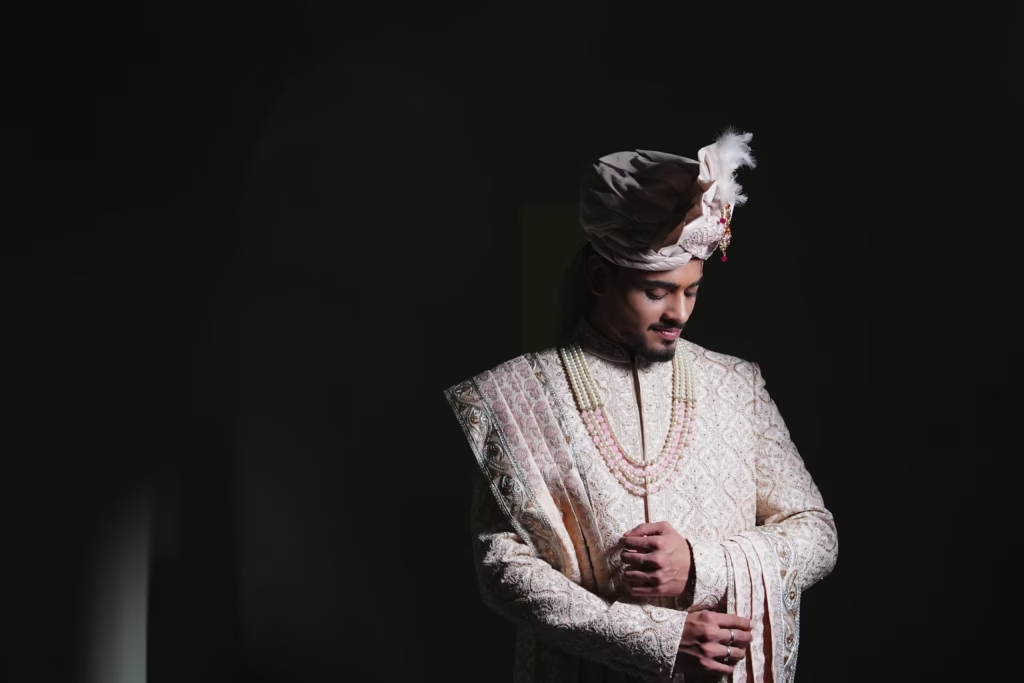
Winter weddings have a natural photographic advantage: the quality of available daylight can be beautiful for portraits.
The lower position of the sun can create softer-looking directional light, while early evening can provide a warm atmosphere for couple portraits and outdoor photographs.
For a wedding photographer, this creates opportunities for:
Natural couple portraits
Beautiful bridal portraits
Family photographs in comfortable daylight
Outdoor candid moments
Detailed photographs of wedding décor
Creative photographs around the venue
Warm evening photographs using professional lighting
However, beautiful winter photography doesn’t happen simply because the wedding is in winter.
The photography timeline needs to be planned around the available light.
That is particularly important for weddings where the ceremony, couple portraits and other important events are spread across the day.
1. Plan Your Wedding Photography Timeline Around Daylight
One of the biggest mistakes couples can make is treating photography as something that happens whenever there is free time.
In winter, this can become a problem because daylight disappears relatively early.
Suppose your wedding ceremony is scheduled for the evening. By the time the couple is ready, family rituals are completed and everyone has reached the venue, the best natural light may already be gone.
A professional wedding photographer should therefore discuss the wedding schedule with you before the event.
It is worth identifying specific windows for:
Bride’s portraits
Groom’s portraits
Couple portraits
Family photographs
Wedding details
Outdoor candid photographs
Group photographs
Even 15–20 minutes of properly planned portrait time can make a significant difference to the final wedding album.
2. Don’t Miss the Winter Golden Hour
Winter sunlight can be particularly attractive for wedding portraits.
Instead of waiting until everything else is finished, try to reserve a short period for couple portraits around the best available natural light.
This doesn’t have to become a long photoshoot.
In fact, many couples prefer a short portrait session because they can return quickly to their guests and celebrations.
A photographer can use this time to create:
Romantic couple portraits
Walking photographs
Silhouette-style images
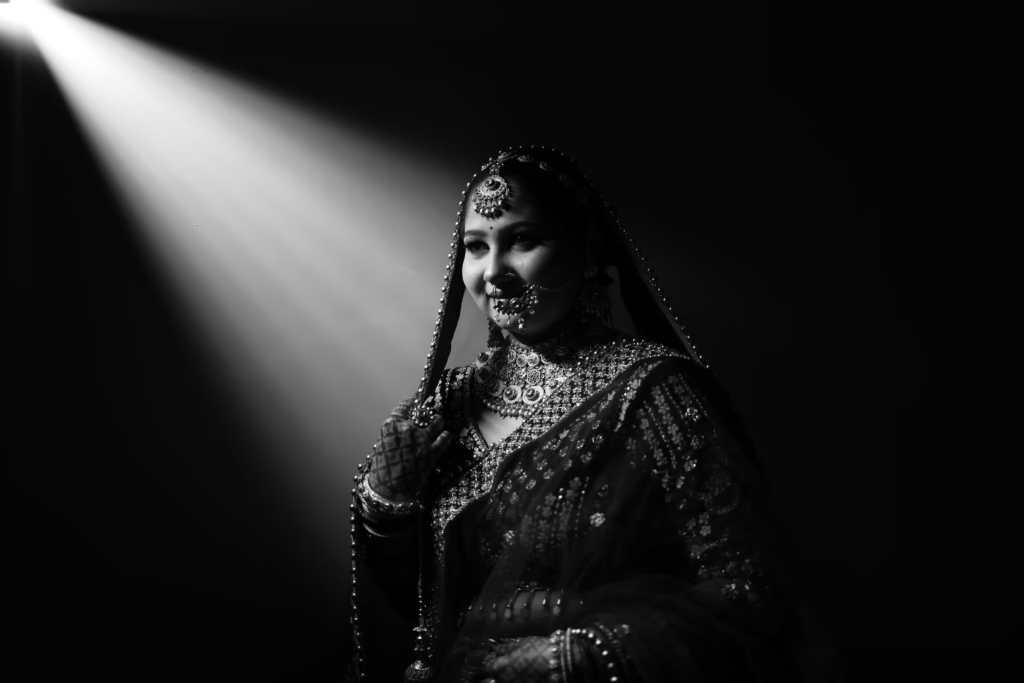
Backlit portraits
Natural interaction photographs
Wide environmental photographs showing the venue
The important point is not to copy a particular pose.
The aim should be to create photographs that feel like your wedding, with the venue, clothing, expressions and atmosphere becoming part of the story.
3. Winter Weddings Need a Good Indoor and Outdoor Photography Plan
Kanpur winter weddings can involve both indoor and outdoor celebrations.
A venue may have a beautiful lawn for the ceremony but an indoor banquet area for dinner. A farmhouse may offer attractive outdoor surroundings but require indoor arrangements for some functions.
This gives a wedding photographer two very different environments to work with.
Before the wedding, it is useful to discuss:
Where will the bride get ready?
Where will the groom’s preparation take place?
Which area will be used for the ceremony?
Where can the couple take portraits?
Where will family photographs be taken?
What happens if the temperature becomes uncomfortable outdoors?
Planning these details beforehand allows the photographer to work naturally rather than trying to solve everything on the wedding day.
4. Keep the Couple Comfortable During Outdoor Portraits
A beautiful photograph is not worth making the couple uncomfortable.
Winter weddings often involve heavy bridal outfits, jewellery, makeup and multiple layers of clothing. The groom may also be wearing a sherwani, suit or other formal attire.
If an outdoor portrait session continues for too long, the couple can become uncomfortable, and that can eventually show in their expressions.
A better approach is to keep outdoor sessions efficient.
A professional photographer can move between locations and compositions quickly, creating a variety of photographs without asking the couple to stand outside for an unnecessarily long period.
This is where experience matters.
The goal is not to spend an hour taking hundreds of photographs.
The goal is to create a smaller collection of photographs that actually deserve a place in your wedding album.
5. Winter Is Excellent for Natural Candid Wedding Photography
Winter weddings are full of small moments that can easily be missed.
The bride laughing with her sisters.
The groom talking to his friends before the ceremony.
Parents watching their children get married.
Grandparents blessing the couple.
Friends warming themselves between functions.
A quiet conversation between the bride and her mother.
These moments may not appear in the wedding schedule, but they often become some of the most meaningful photographs.
This is where candid photography becomes important.
Instead of asking everyone to stop and pose, a candid photographer observes what is happening and anticipates meaningful moments.
For couples who want genuine emotions documented alongside their formal wedding photographs, a combination of candid and traditional coverage can work particularly well.
You can explore our dedicated Candid Wedding Photography page for a detailed look at our approach.
6. Don’t Forget the Details
Wedding photographs are not only about the bride and groom.
Winter weddings often have beautiful visual details that deserve to become part of the story.
Think about:
Bridal jewellery
Wedding invitations
Wedding rings
Mehndi
Floral décor
Mandap decoration
Table settings
Bridal footwear
Groom’s accessories
Wedding outfits
Family heirlooms
Ceremony details
These photographs help connect the major moments of the wedding.
Years later, you may remember the ceremony, but photographs of the smaller details can bring back the atmosphere of the entire celebration.
7. Evening Functions Require Proper Lighting
Many winter wedding functions take place after sunset.
Sangeet, cocktail parties, receptions and wedding ceremonies can involve challenging lighting conditions because venues often combine decorative lights, stage lighting, LEDs and relatively dark surroundings.
This is one reason professional wedding photography equipment and lighting technique matter.
A photographer should be able to work with the existing venue lighting while adding controlled lighting when required.
The objective is not to make every photograph look artificially lit.
Good lighting should support the atmosphere of the wedding while keeping skin tones, expressions and important details natural.
8. Make Time for Family Photographs
Candid photographs are beautiful, but don’t completely ignore traditional family photographs.
A wedding album should also include photographs that future generations can look at and immediately understand who was present.
Make a list of important family combinations before the wedding.
For example:
Bride with parents
Groom with parents
Bride and groom with both families
Grandparents with the couple
Brothers and sisters
Close relatives
Friends
Wedding party
This becomes particularly useful during large Indian weddings where dozens of people may be moving around at the same time.
Having a basic family-photo list helps ensure that important people are not accidentally missed.
9. Give Your Photographer the Right Information Before the Wedding
A photographer can work much more effectively when they understand the wedding before arriving at the venue.
Share:
Wedding date
Venue
Functions
Function timings
Getting-ready locations
Important rituals
Special family members
Planned couple-entry details
Special performances
Any surprise planned for the couple
Any photography style you particularly like
You don’t need to prepare a complicated photography brief.
Even a simple timeline can make a big difference.
At Studio Rollii, we recommend discussing the event schedule and photography requirements in advance so that the coverage can be planned around the actual celebration rather than trying to improvise everything on the wedding day.
10. Choose a Photographer Who Understands Indian Weddings
Wedding photography is not only about portraits.
Indian weddings involve rituals, family relationships, ceremonies, emotions and multiple events happening simultaneously.
The photographer needs to know when an important ritual is about to happen and where to position themselves without disturbing the ceremony.
This becomes particularly important during:
Jai Mala
Pheras
Kanyadaan
Sindoor
Vidaai
Haldi
Mehndi
Sangeet
Engagement ceremonies
Family rituals
A photographer familiar with Indian weddings can anticipate many of these moments rather than reacting after they have already happened.
Check our wedding photography page for details
11. Candid and Traditional Photography Can Work Together
Couples sometimes ask whether they should choose candid photography or traditional photography.
It doesn’t necessarily have to be an either-or decision.
Traditional photography is useful for documenting important rituals, family combinations and formal photographs.
Candid photography adds the spontaneous side of the wedding—the expressions, laughter, reactions and interactions that happen around those rituals.
Together, they can create a more complete visual record of the wedding.
If you are specifically comparing the two approaches, you can read our detailed guide on Candid Photography vs Traditional Photography.
12. Don’t Turn Your Wedding Day Into a Photoshoot
This is an important point.
Your wedding should remain a wedding—not become a full-day photography session.
The best wedding photographs often happen when couples are actually enjoying themselves.
Laugh with your friends.
Talk to your family.
Enjoy the ceremony.
Dance.
Look at each other.
Forget the camera occasionally.
An experienced wedding photographer should be able to observe and document those moments without constantly asking you to recreate them.
The photographs then become a record of what actually happened rather than a collection of photographs that all look staged.
13. Winter Wedding Photography in Kanpur
Kanpur has a wide variety of wedding venues and celebrations, from banquet halls and hotels to farmhouses, lawns and family functions.
Every venue presents different photography opportunities.
An indoor banquet may provide controlled lighting and dramatic décor.
A lawn can provide beautiful natural portraits during the day.
A farmhouse may offer more space for environmental photographs.
A traditional family wedding may provide intimate emotional moments that are completely different from a large hotel celebration.
That is why we believe wedding photography should be planned around the couple, venue and celebration, rather than following exactly the same formula for every wedding.
Studio Rollii is based in Kanpur and provides wedding photography services in Kanpur and surrounding areas, with selected outstation and destination assignments as well.
What Should You Ask a Winter Wedding Photographer?
Before booking your photographer, don’t only ask for the package price.
Ask questions such as:
Will you help us plan the photography timeline?
A good photographer should be able to explain how portrait sessions, family photographs and important moments can fit around the wedding schedule.
How do you handle low-light wedding functions?
Ask about the photographer’s approach to receptions, sangeet functions and evening ceremonies.
Do you provide both candid and traditional photography?
If you want both styles, make sure the complete requirement is clearly discussed before booking.
How many photographers will cover the wedding?
Large weddings often have multiple things happening simultaneously, so coverage requirements should be discussed according to the scale of the event.
Can we see complete wedding stories?
Don’t look only at five or ten Instagram photographs.
Ask to see complete wedding stories or photography galleries. This gives you a much better idea of how the photographer documents an entire celebration.
A Simple Winter Wedding Photography Checklist
Before your wedding day, keep this checklist handy:
☐ Finalise your wedding photography team early
☐ Share the complete wedding timeline
☐ Discuss sunrise/sunset and outdoor portrait timing
☐ Identify suitable indoor and outdoor portrait locations
☐ Keep some time aside for couple portraits
☐ Prepare a family photograph list
☐ Inform the photographer about important rituals
☐ Discuss evening lighting requirements
☐ Share venue details before the wedding
☐ Discuss the photography style you prefer
☐ Keep enough buffer time between major events
☐ Let the photographer know about any special surprises or planned moments
A little preparation can prevent a lot of last-minute stress.

Final Thoughts: Let Your Winter Wedding Photographs Tell the Whole Story
A winter wedding gives you a beautiful combination of comfortable celebrations, elegant outfits, atmospheric evenings and opportunities for natural photographs.
But the photographs become truly meaningful when they capture more than the decoration and the poses.
They should show the nervous excitement before the ceremony.
The smile between two people who have just become family.
The parents watching their children begin a new chapter.
The laughter shared with friends.
The rituals that have been part of the family for generations.
And all those small moments that you may not even notice while your wedding is happening.
At Studio Rollii, our approach to wedding photography is centred around observing these moments and turning them into a visual story that feels personal to each couple.
If you are planning a winter wedding in Kanpur or nearby areas and would like to discuss your photography requirements, share your wedding date, venue and functions with us.
Your wedding deserves photographs that don’t just show how the celebration looked—but help you remember how it felt.
Studio Rollii – Professional Wedding Photography in Kanpur